Showing posts with label medicine. Show all posts

Tuesday, March 3, 2026

The Antonine Plague and the End of Ancient Rome’s Golden Age

Tuesday, April 7, 2026, 7-8:15pm Eastern Time
~ Jonathon Erlen Lecture ~
Colin Elliott, PhD
Professor of History
Indiana University, Bloomington

In the mid-second century AD, ancient Rome thrived at the height of its power under the emperor Marcus Aurelius. The Pax Romana, a period of relative peace and stability, seemed unassailable. Yet around AD 165, a devastating illness, now known as the Antonine plague—possibly history’s first pandemic—swept through the Roman legions and ravaged urban centers, including the imperial capital itself. This fast-spreading but mysterious disease killed thousands and acted as a catalyst for profound social, economic, and political changes while exposing deep-seated fragilities in the Empire’s institutions. The Antonine plague disrupted Rome’s economy, already strained by stagnation, exacerbated food insecurity that fueled riots and mass migration, and strained military campaigns in the Balkans and Middle East. It also intensified social tensions, including the persecution of early Christians. This talk provides a comprehensive history of the plague, blending ancient accounts from figures like the physician Galen with modern scientific analysis. It examines the interplay of epidemiology, environmental stressors and Rome’s institutions, offering a vivid picture of how the plague both reflected and accelerated the Empire’s vulnerabilities, setting the stage for its eventual decline. Click here for the Zoom link.

Colin Elliott is a Professor of History at Indiana University, Bloomington. He specializes in the Roman Empire’s economic, social and environmental history. He is author of Pox Romana: The Plague that Shook the Roman World (Princeton, 2024) and Economic Theory and the Roman Monetary Economy (Cambridge, 2020). He is now at work on a book entitled Gladiator & Tyrant: Commodus, Last Emperor of the Pax Romana, a biography of the Roman emperor Commodus, whose life offers a cautionary tale of failed leadership, squandered prosperity, and the darkness within the human soul. Professor Elliott hosts a weekly Roman history podcast on Spotify called The Pax Romana Podcast.

Image: Jules Elie Delaunay, The Plague in Rome (1869), public domain image from the Minneapolis Institute of Art

This event is good for Catalogue of Opportunity Credit and for Continuing Education for doctors and nurses (CME and CE).

*Please note the new time! After decades of events at 6pm on Tuesday evenings, we are pushing back the start time to 7pm to better accommodate folks who are commuting, have sign-out after a shift, or are joining us from more western time zones. We are also no longer catering dinner since the pandemic. Therefore, all lectures will begin at 7pm Eastern and wrap up by 8:15pm.*

Friday, January 23, 2026

White-Capped Dreams: The (Dis)appearance of Filipino Men Nurses Under the Colonial Gaze, 1910–1945

Tuesday, February 24, 2026, 7-8:15pm*
Ren Capucao, MSN, RN, and PhD 
(Bjoring Center for Nursing Historical Inquiry, School of Nursing, University of Virginia)

Filipino nurses’ disproportionate mortality in the United States during the COVID-19 pandemic underscores an uneven labor migration and exposure to workplace risks. More broadly, their deaths raise the persisting specter of American imperialism and its unresolved and repetitive violence over Filipino nurses dating back to the US colonial period in the Philippines. The violence during this period, however, remains obscured by colonial discourses of care tied to American benevolence and modern nursing’s cultural association with altruism. This talk thus delves into the underbelly of care by foregrounding the subjectivities and lived experiences of Filipino nurses, who variously accepted, resisted, or succumbed to the standards and strains of a racialized modernity. It discusses these nurses’ agency amidst the institutionalization of nursing in the Philippines and the racialization of Filipinos’ caring ability. Click here to watch the recording.

Dr. Capucao will also deliver Grand Rounds for the Department of Medicine at 12pm noon the same day. To see "Adiós Muchacho, Hello Nurse: Efficiency at the Philippine General Hospital, 1898–1916," use the “virtual meeting click to watch” link on the Medicine Grand Rounds homepage.

Image from announcement for the Pitt School of Nursing screening of Nurse Unseen

Dr. Capucao is a nurse historian and postdoctoral research associate affiliated with the Bjoring Center for Nursing Historical Inquiry at the University of Virginia, where he also earned his B.A., M.S.N., and Ph.D. As a US Fulbright scholar at the University of the Philippines College of Nursing, he co-authored the book Saving Lives, Raising Standards: The History of UP Nursing, which illustrates the role of the University of the Philippines, from US colonization to the COVID-19 pandemic, in the national development of the nursing profession. His research and teaching approach the modern history of nursing and healthcare in the Philippines and the United States through a comparative and transnational lens. Through the study of Filipino nurses, he depicts how the success of normative assimilation remains bound to oppressive structures that maintain social inequality, induce vulnerability and risk, and wear down physical and mental health. 

*Please note the new time! After decades of events at 6pm on Tuesday evenings, we are pushing back the start time to 7pm to better accommodate folks who are commuting, have sign-out after a shift, or are joining us from more western time zones. We are also no longer catering dinner since the pandemic. Therefore, all lectures will begin at 7pm Eastern and wrap up by 8:15pm.*

Thursday, October 2, 2025

The Skillful Surgeon: Expertise, Authority, and Surgical Illustrations in Late Renaissance Europe


Tuesday, November 11, 2025, 7-8:15pm
~ Sylvan E. Stool lecture ~
Alisha Rankin, PhD
Professor & Chair of History
Tufts University

Surgery was generally something to be feared in Renaissance Europe. Without anesthesia, antiseptics, or antibiotics, it was dangerous, painful, and often deadly. Yet surgeons were also among the most populous and valued medical practitioners at the time, and they took their jobs seriously. This talk examines surgeons’ efforts to highlight their skill and competency. It focuses on illustrated writings by surgeons who conducted elective surgeries: couching for cataracts, removing bladder stones by lithotomy, and operating on inguinal hernias. In the German-speaking regions of the sixteenth and seventeenth centuries, several specialist surgeons compiled ornately illustrated documentation of their expertise. In a bid to raise the status of specialists, I argue, these upwardly-mobile surgeons used both text and images to celebrate their significant skill and portray these elective surgical operations as reliable and routine.


Alisha Rankin is Professor and Chair of History at Tufts University and a co-editor of the Bulletin of the History of Medicine. Her work focuses on the history of medicine and science in early modern Europe, with a particular focus on questions of experiment, expertise and authority. She is the author of two award-winning books, Panaceia's Daughters: Noblewomen as Healers in Early Modern Europe (Chicago, 2013) and The Poison Trials: Wonder Drugs, Experiment, and the Battle for Authority in Renaissance Science (Chicago, 2021), alongside two edited collections and multiple articles. Currently she is co-editing the Cambridge History of Medicine, Volume 3: Early Modern Medicine, 1450-1700 and working on a book about specialist surgeons, from which this talk derives.

Attendance at this Zoom lecture is free.

*Please note the new time! After decades of events at 6pm on Tuesday evenings, we are pushing back the start time to 7pm to better accommodate folks who are commuting, have sign-out after a shift, or are joining us from more western time zones. We are also no longer catering dinner since the pandemic. Therefore, all lectures will begin at 7pm Eastern and wrap up by 8:15pm.*

Sunday, August 3, 2025

2025-2026 Lecture Series

We are delighted to announce our 42nd speaker series. NEW THIS YEAR: all lectures take place at 7pm Eastern Time. This will make it easier for folks who are joining after work or from more western time zones. The lectures are still free and open to the public via Zoom. Watch this space, join our email list, or check out our Facebook page to get the link.


September 30, 2025 ~ Milton Meyer Michaels Lecture
 "The History of Hemophilia"
Franklin Bontempo, MD (Medicine/Hematology, University of Pittsburgh)

November 11, 2025 ~ Sylvan E. Stool Memorial Lecture
"The Skillful Surgeon: Expertise, Authority, and Surgical Illustrations in Late Renaissance Europe"
Alisha Rankin, PhD (History, Tufts)

January 20, 2026 ~ Graduate School of Public Health speaker + Annual Business Meeting ~ 
"Beyond the Broad Street Pump: Insights into the History of Public Health"
Jamie Sokol (Public Health, University of Pittsburgh)

February 24, 2026
"White-Capped Dreams: The (Dis)appearance of Filipino Men Nurses Under the Colonial Gaze, 1910–1945"
Ren Capucao, MSN, RN, and PhD 
(Bjoring Center for Nursing Historical Inquiry, School of Nursing, University of Virginia)

April 7, 2026 ~ Jonathon Erlen Lecture
"The Antonine Plague and the End of Ancient Rome's Golden Era"
Colin Elliott, PhD (History, University of Indiana, Bloomington)

Tuesday, January 28, 2025

Black Infant Mortality and the American Roots of a Health Inequality

Tuesday, February 25, 6-7:15pm (Eastern)
~ University of Pittsburgh Department of Medicine Grand Rounds ~
Wangui Muigai, PhD (Brandeis University)


Join Dr. Muigai as she traces the origins of one of the most enduring health disparities in the nation: the racial gap in infant survival. Drawing on a range of archival materials spanning the 19th and 20th centuries, this talk explores the ways Black families, health care practitioners, and government officials have addressed the health and survival of Black mothers and their babies. The talk will conclude by reflecting on the legacy of these local and nationwide efforts in the ongoing struggle to improve birth equity.

At noon that day, Professor Muigai will deliver Grand Rounds for the University of Pittsburgh Department of Medicine, a talk entitled "Race-Concordant Care: Historical Insights and Ethical Challenges." For more information, see their website.

A historian of medicine and public health, Dr. Muigai is an assistant professor at Brandeis University. Her research examines the racial, social, and ethical dimensions of health and health care in America across the nineteenth and twentieth centuries. She is a Class of 2025 Fellow in the Greenwall Foundation’s Faculty Scholars Program in Bioethics and former History Fellow at the American College of Obstetricians and Gynecologists. Currently she is completing a book-length history of Black infant mortality, forthcoming with Harvard University Press, and researching African American views on trust in health care. She earned her Ph.D. from Princeton University and A.B. from Harvard University.

This lecture will be online only. Attendance is FREE. Click here for the Zoom link. 

The C.F. Reynolds Medical History Society thanks its dues-paying members and the University of Pittsburgh Center for Bioethics and Health Law for its support of the continuing relevance of medical history in our world.

Sunday, September 1, 2024

Medicine’s Culture Brokers: The History of Miami and the Challenge of Diversity in Health Care

Tuesday, September 24, 2024, 6-7:15pm (Eastern)
~ Milton Meyer Michaels Lecture & Hispanic Heritage Month ~
Catherine Mas, PhD (Assistant Professor of History, Florida International University)


After the 1959 Cuban Revolution, hundreds of thousands of Cuban refugees came to Miami. With this influx, the city's health care system was overwhelmed not just by the number of patients but also by the differences in culture. Mainstream medicine was often inaccessible or inadequate to Miami's growing community of Latin American and Caribbean immigrants. Instead, many sought care from alternative, often unlicensed health practitioners. This talk discusses the history of how an exceptionally diverse medical scene would catch the attention of medical social scientists who made Miami's multiethnic population into a laboratory for cross-cultural care and "global health."

Catherine Mas is a historian of science, medicine, and society, whose research and teaching focus on modern American history in transnational context. Her recent book, Culture in the Clinic: Miami and the Making of Modern Medicine, examines the history of health and healing in Miami alongside the rise of medical anthropology. Delving into a period of rapid social and demographic change, she shows how Latinx immigrants transformed American healthcare, as the healthcare system learned to manage a racially and ethnically diverse population.

This lecture will be online only. Attendance is FREE. Zoom link: https://ccac.zoom.us/j/91318349535?pwd=zx3PJ8go1ukPKwyG3bifa65vdYPqpX.1

The C.F. Reynolds Medical History Society thanks its dues-paying members and the University of Pittsburgh Center for Bioethics and Health Law for its support of the continuing relevance of medical history in our world.

Monday, March 4, 2024

Inaugural Michaels Lecture: Gender, Race, and Science in Med School Design

 “Forming the Modern Physician: Gender, Race, and Science
in Early Twentieth-Century Medical School Design”
April 2, 2024 ~ Inaugural Michaels Lecture ~
Katherine L. Carroll, PhD (Independent Scholar)

Architectural historian Dr. Carroll has presented widely on medical school design and the intertwined ways in which the built environment influences scientific culture, as well as the ways in which cultural and social priorities affect building choices. As the University of Pittsburgh School of Medicine celebrates the one-year anniversary of the opening of the new West Wing of Scaife Hall, and Duquesne University renovates its campus to welcome a brand-new DO medical school, this was thoughtful commentary about how past schools have made other choices. Click here for the recording (starts at 4:40).

This was the first annual Milton Meyer Michaels lecture. A life-long Pittsburgher, Dr. Michaels (1927-2022) practiced Hematology and Internal Medicine for over five decades. He supported the C.F. Reynolds Medical History Society for many years, having also served as its President. We thank the generosity of his wife, Lois Glazer Michaels, and their children, Eric, Marian, and Jacob, for endowing this speakership.


The C.F. Reynolds Medical History Society thanks the University of Pittsburgh Center for Bioethics and Health Law for its support of the continuing relevance of medical history in our world.


Image: University of Pittsburgh School of Dentistry shortly after construction (1912). University of Pittsburgh Archives photograph collection, 1971-2006, item 31735070042936.

Image description: A sepia-toned photograph depicts a long, rectangular building with two stories of tall plain windows and one story of short windows. There is decorative stone work around the entrance portal and a small facade on the roof.

Tuesday, November 14, 2023

Putting Science to Work: Women Healers and the Pursuit of Medical Knowledge in Early Pennsylvania

November 14, 2023, 6-7:15pm Eastern Time
~ Sylvan E. Stool Memorial Lecture ~
Susan H. Brandt, PhD (University of Colorado, Colorado Springs) 


The history of women physicians in the United States often begins with the 1850 founding of the Women’s Medical College in Philadelphia. However, mid-19th-century women physicians merely continued the legacies of other women healers from earlier centuries. In this talk based on her book, Women Healers: Gender, Authority, and Medicine in Early Philadelphia (2022), Susan Brandt argues that women not only were essential health care providers but also were on the frontlines of scientific knowledge production.

Dr. Sylvan Stool was a beloved pediatric ENT surgeon at the University of Pittsburgh. All Reynolds Society lectures are free and open to the public. You can find the recording of the lecture here.

Image description: The book cover of Women Healers: Gender, Authority, and Medicine in Early Philadelphia by Susan H. Brandt shows an artfully arranged collection of 18th-century medical artifacts, books, and plants.

Wednesday, September 6, 2023

The Child Amputee in Post-World War II America


September 26, 2023, 6-7:15pm Eastern Time
~ Annual Ravitch Lecture ~
Lisa Joy Pruitt, PhD (Middle Tennessee State University)

Dr. Lisa Joy Pruitt, PhD (Middle Tennessee University), will give the Annual Ravitch Lecture to kick off the C.F. Reynolds Medical History Society's 40th lecture season. Before 1945, the standard of care for child amputees and/or those with congenital limb differences was to delay treatment and rehabilitation when possible or otherwise to cope with surgical procedures and prosthetic limbs designed for adults. After 1945, practitioners coordinated their efforts, revolutionized the rehabilitation of child amputees, and profoundly influenced the development of pediatric prosthetics.

A recording of this free public online talk can be found by clicking here.


Image description: The first panel of the comic strip reads, "Do Not." In the second panel, a man with light skin and short black hair wearing hospital pajamas lies on a bed with his left leg bent over the edge; his left foot has been amputated. The text reads "...hang stump over bed." In the third panel a similar man is reading a newspaper. The text reads, "...sit in wheelchair with stump flexed." The image comes from A.B. Wilson, Jr., "Limb Prosthetics Today," Artificial Limbs 7 (1963): 1-42, page 13.

Sunday, August 28, 2022

Freedom House Ambulance Service: A Conversation

Tuesday, April 4, 2023
6-7:15pm Eastern Time (US and Canada)

~ Ravitch Lecture ~
Phil Hallen
President Emeritus, Maurice Falk Foundation

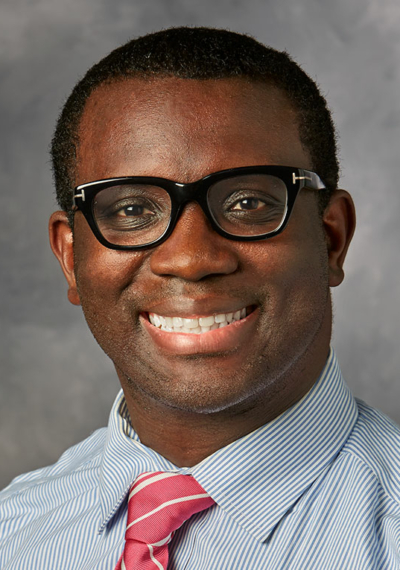
Matthew L. Edwards
, MD
Assistant Professor of Psychiatry, Stanford University School of Medicine

In 1968, the Freedom House Ambulance Service began offering pre-hospital care to the Hill District and other neighborhoods in Pittsburgh where the police wouldn't even do a "scoop and run" to take patients to the hospital. These first paramedics not only provided transportation but also expert pre-hospital medical care that became a model for the nation. After we watch WQED's documentary Freedom House Ambulance: The FIRST Responders, Mr. Hallen and clinician-historian Dr. Edwards will discuss this seminal contribution of Black Americans to modern healthcare.

Emblem from http://freedomhousedoc.com/


This lecture is free and open to public. Please email cfreynoldsmhs@gmail.com to receive the Zoom link. Donations toward the speakers' honoraria are gratefully appreciated.

The C.F. Reynolds Medical History Society thanks the University of Pittsburgh Center for Bioethics and Health Law for its generous support of the continuing relevance of medical history in our world. 

Monday, August 22, 2022

The Edge of Silence: A History of Fanciful Deafness Fads

Tuesday, February 21, 2023
12-1pm Eastern Time (US and Canada)
~ Department of Medicine Grand Rounds ~

Jaipreet Virdi, PhD
Assistant Professor of History, University of Delaware

Healing fads thrive on spectacle and fascination, fueled by the media’s obsession with sensational stories and charismatic celebrities undergoing extraordinary treatments. These fads promise a cure and promote the belief that no matter how implausible or dangerous, any cure for a stigmatized condition is worthwhile if it can promise hope. This talk focuses on the history of twentieth-century medical fads for deafness that obtained legitimacy within American medical circles, including magnetism, chiropractic adjustment, and osteopathy. By appealing to the emotional vulnerability of patients and offering optimism, these fads gained prominence—even when their benefits fell short of expected outcomes. Contact Tiffany Rocco (roccotp@upmc.edu) if you would like to attend.

Tuesday, February 21, 2023
6-7:15pm Eastern Time (US and Canada)
~ Reynolds Society Lecture ~


In the evening, Professor Virdi presented "Negotiating Normalcy: Deafness Cures in American History," based on her book, Hearing Happiness: Deafness Cures in History (University of Chicago, 2020). She is a specialist in the history of medicine, disability studies, and the history of technologies such as hearing aids. See her website for a Curriculum Vitae and current work.

The C.F. Reynolds Medical History Society thanks the University of Pittsburgh Center for Bioethics and Health Law for its generous support of the continuing relevance of medical history in our world. 

Sunday, August 21, 2022

Jim Crow in the Asylum: Psychiatry and Civil Rights in the American South

Tuesday, November 1, 2022
6-7:15pm Eastern Time (US and Canada)
~ Sylvan E. Stool Memorial Lecture ~

Kylie M. Smith, BA, PhD
Associate Professor and Andrew W. Mellon Faculty Fellow for Nursing & the Humanities
at the Nell Hodgson Woodruff School of Nursing
AND Associate Faculty in Department of History, Emory University

Psychiatric hospitals in the United States have always functioned as spaces of both custody and care. In the mid 20th century legislation was passed in an attempt to improve conditions and treatment practices for patients, but these developments were delayed in the South due to an insistence on racial segregation. In this talk, I draw on extensive archival sources from my book in progress to show the ways that Southern psychiatric hospitals in the mid twentieth century had become home to many thousands of Black patients with mental and physical disability, where treatment and care was custodial at best, violent and abusive at worst. Yet these hospitals were also the scene of important Civil Rights activism in the 1960s which revealed the ways that psychiatry functioned as a tool of white supremacy. This activism led to the end of segregation, but could not fix the racism that underpins the provision of mental health and disability care today. 

This project is funded by the G13 Grant from the National Library of Medicine and will be published by UNC Press in 2024.

The C.F. Reynolds Medical History Society thanks the University of Pittsburgh Center for Bioethics and Health Law for its generous support of the continuing relevance of medical history in our world.


Image is a colored wood engraving of a large, old-fashioned white building with many windows set behind a grassy lawn with trees. An American flag flies from the roof in a blue sky with white clouds. Two women with hoop skirts and parasols walk in the foreground. It is labeled "Bloomingdale Asylum (Lunatic). / A Department of the New York Hospital." Bloomingdale operated 1821-1899. Image courtesy Wellcome Images.

Monday, March 28, 2022

The Making of an Anesthesiologist


Tuesday, April 5, 2022, 6-7:15pm Eastern
~ Annual Ravitch Lecture ~
"Journey to Medicine"
William Simmons, MD

Associate Professor and Diversity Director for Anesthesiology and Perioperative Medicine at the University of Pittsburgh School of Medicine, Dr. Simmons will describe his history-making life and career, from being the first in his family to attend college to excelling as one of the few Black physicians in his chosen fields of pediatrics and anesthesiology to giving back as a community leader in Pittsburgh. Here is the recording.

Image: Early inhaler for ether anaesthesia, London, England, 1847-1. Science Museum, London. Wellcome Images (CC BY 4.0)