Showing posts with label history. Show all posts

Sunday, August 2, 2026

Henrietta Lacks: What Her Cells Saved and What Science Took


Henrietta Lacks (HeLa): The Mother of Modern Medicine
By Kadir Nelson (1974- )
Image courtesy of the National Portrait Gallery

Henrietta Lacks changed the course of medicine without ever being given the choice to take part in it. In January of 1951, Henrietta, a young Black mother of five, sought treatment at Johns Hopkins Hospital after experiencing abnormal vaginal bleeding. She was diagnosed with cervical cancer. During her treatment, samples of her cancerous tissue were sent to Dr. George Otto Gey’s laboratory and cultured without her knowledge or consent. Henrietta passed away at the age of 31, but her cells did something no other human cells had ever done before. Referred to as “HeLa cells,” her cancer cells became the first human cells that researchers could stably maintain and reproduce in a laboratory.

The ability of HeLa cells to keep dividing comes partly from an enzyme called telomerase. Most human cells can only divide a set number of times. Each division shortens the telomeres, the small protective ends of chromosomes, until the cell eventually reaches its limit. HeLa cells maintain telomerase activity, which helps prevent their telomeres from becoming critically short and allows the cell line to continue dividing. Her cells also contain HPV-18 DNA, which encodes E6 and E7 proteins that weaken the cell’s normal defenses and allow cancerous cells to keep multiplying when they should have stopped. Research has shown that the continued activity of HPV-18 E6 and E7 helped HeLa cells maintain their rapid growth. When researchers suppressed these proteins HeLa cells stopped growing and began to die.

For more than 70 years, Henrietta’s stolen cells have been used in thousands of studies and have contributed to the development of the HPV and polio vaccines, gene mapping, and even COVID-19 research. The NIH has identified more than 110,000 publications involving HeLa cells. Her story reflects a period in history in which the autonomy of patients, particularly those from marginalized groups, was frequently disregarded. The journey toward ethical reform in research has been slow and strenuous. For decades, the lack of standardized consent forms allowed researchers to use patients' samples with very few restrictions. A major change came with the introduction of the Common Rule in 1991, which established requirements involving institutional review boards, informed consent, and oversight for covered federally conducted or supported human-subject research.

Henrietta’s story became central to debates over whether existing protections were enough for research involving stored tissue, cell lines, and genomic information. In 2013, the National Institutes of Health (NIH) reached a landmark agreement with the Lacks family, granting the Lacks family a voice in reviewing requests for access to certain controlled HeLa genome data. 

Jeri Lacks-Whye, Henrietta’s granddaughter and a spokesperson for the Lacks family, has spoken about the complex issues of her legacy. During her visit to the University of Wisconsin-Madison in February 2026, Jeri shared her sentiments of knowing her grandmother’s cells are stored in many major research labs in the world, while the family lived for decades struggling to afford medical care.

Jeri states, “We just had to keep the faith and make sure we don't think that we're beneath anyone, that we are equal, even though you may know more than me, we still can work together to accomplish a common goal.”

Jeri also stressed the importance of medical professionals recognizing their patients' humanity.

“Treat me the way I would like to be treated, as a human being, as a whole person, not as a specimen or just somebody that you can make a dollar off of.”

Jeri’s concerns and fear of exploitation are shared by many. In a focus group study of patients from several racial and ethnic backgrounds, participants discussed their concerns about donating biological samples for precision medicine research. Participants worried about where samples might go, what they could be used for, and whether someone else might profit from them without ever asking them again. Some participants drew a clear line between sharing their medical information and giving away a physical part of themselves. A participant from the South Asian focus group stated, “I don’t want to be Henrietta Lacks,” reflecting the fear of being left out of the story while their samples create value for others. 

These concerns raise various questions of public health justice, including genetic privacy, informed consent, commercial profit, and whether patients and their communities should share in the benefits created from their biological materials. In 2023, the Lacks’ estate reached a legal settlement with Thermo Fisher Scientific, a biotechnology company that had commercialized products involving HeLa cells. The settlement was confidential and did not publicly establish ownership rights over HeLa cells. For current and future healthcare practitioners, researchers, policymakers, and public health professionals, the story of Henrietta Lacks serves as a stark reminder that medical excellence cannot exist without ethical integrity. Her cells contributed to the advancement of biomedical research, but the way they were obtained and used also exposed failures in consent, communication, respect, and justice. 

Honoring Henrietta Lacks means remembering both the discoveries her cells made possible and the harm her family endured. Her story reminds us that scientific research should never cross the boundary of valuing a breakthrough more than the human being behind it.


Written by: Ifeanyi Igboaka, PharmD | Pharmacogenomics and Health Equity Researcher 


References

Beskow, L. M. (2016). Lessons from HeLa cells: The ethics and policy of biospecimens. Annual Review of Genomics and Human Genetics, 17, 395–417.

DeFilippis, R. A., Goodwin, E. C., Wu, L., & DiMaio, D. (2003). Endogenous human papillomavirus E6 and E7 proteins differentially regulate proliferation, senescence, and apoptosis in HeLa cervical carcinoma cells. Journal of Virology, 77(2), 1551–1563.

Ivanković, M., Ćukušić, A., Gotić, I., Škrobot, N., Matijašić, M., Polančec, D., & Rubelj, I. (2007). Telomerase activity in HeLa cervical carcinoma cell line proliferation. Biogerontology, 8(2), 163–172.

Lee, S. S.-J., Cho, M. K., Kraft, S. A., Varsava, N., Gillespie, K., Ormond, K. E., Wilfond, B. S., & Magnus, D. (2019). “I don’t want to be Henrietta Lacks”: Diverse patient perspectives on donating biospecimens for precision medicine research. Genetics in Medicine, 21(1), 107–113.

National Institutes of Health. (2025). The NIH-Lacks Family Agreement. Accessed 30 July 2026.

National Institute of Health Office of Science Policy. (2022) HeLa Cells: A Lasting Contribution to Biomedical Research. Accessed 30 July 2026.

Smith, J. D., Birkeland, A. C., Goldman, E. B., Brenner, J. C., Carey, T. E., Spector-Bagdady, K., & Shuman, A. G. (2017). Immortal life of the Common Rule: Ethics, consent, and the future of cancer research. Journal of Clinical Oncology, 35(17), 1879–1883.

Strecker, C. (2026). 75 years ago, her cells were taken without consent. Today her family honors her legacy to make sure it never happens again. The Daily Cardinal.

Vasquez, K. (2023). Henrietta Lacks’s descendants settle lawsuit against Thermo Fisher. Chemical & Engineering News, 101(26), 17.


Tuesday, March 3, 2026

The Antonine Plague and the End of Ancient Rome’s Golden Age

Tuesday, April 7, 2026, 7-8:15pm Eastern Time
~ Jonathon Erlen Lecture ~
Colin Elliott, PhD
Professor of History
Indiana University, Bloomington

In the mid-second century AD, ancient Rome thrived at the height of its power under the emperor Marcus Aurelius. The Pax Romana, a period of relative peace and stability, seemed unassailable. Yet around AD 165, a devastating illness, now known as the Antonine plague—possibly history’s first pandemic—swept through the Roman legions and ravaged urban centers, including the imperial capital itself. This fast-spreading but mysterious disease killed thousands and acted as a catalyst for profound social, economic, and political changes while exposing deep-seated fragilities in the Empire’s institutions. The Antonine plague disrupted Rome’s economy, already strained by stagnation, exacerbated food insecurity that fueled riots and mass migration, and strained military campaigns in the Balkans and Middle East. It also intensified social tensions, including the persecution of early Christians. This talk provides a comprehensive history of the plague, blending ancient accounts from figures like the physician Galen with modern scientific analysis. It examines the interplay of epidemiology, environmental stressors and Rome’s institutions, offering a vivid picture of how the plague both reflected and accelerated the Empire’s vulnerabilities, setting the stage for its eventual decline. Click here for the Zoom link.

Colin Elliott is a Professor of History at Indiana University, Bloomington. He specializes in the Roman Empire’s economic, social and environmental history. He is author of Pox Romana: The Plague that Shook the Roman World (Princeton, 2024) and Economic Theory and the Roman Monetary Economy (Cambridge, 2020). He is now at work on a book entitled Gladiator & Tyrant: Commodus, Last Emperor of the Pax Romana, a biography of the Roman emperor Commodus, whose life offers a cautionary tale of failed leadership, squandered prosperity, and the darkness within the human soul. Professor Elliott hosts a weekly Roman history podcast on Spotify called The Pax Romana Podcast.

Image: Jules Elie Delaunay, The Plague in Rome (1869), public domain image from the Minneapolis Institute of Art

This event is good for Catalogue of Opportunity Credit and for Continuing Education for doctors and nurses (CME and CE).

*Please note the new time! After decades of events at 6pm on Tuesday evenings, we are pushing back the start time to 7pm to better accommodate folks who are commuting, have sign-out after a shift, or are joining us from more western time zones. We are also no longer catering dinner since the pandemic. Therefore, all lectures will begin at 7pm Eastern and wrap up by 8:15pm.*

Friday, January 23, 2026

White-Capped Dreams: The (Dis)appearance of Filipino Men Nurses Under the Colonial Gaze, 1910–1945

Tuesday, February 24, 2026, 7-8:15pm*
Ren Capucao, MSN, RN, and PhD 
(Bjoring Center for Nursing Historical Inquiry, School of Nursing, University of Virginia)

Filipino nurses’ disproportionate mortality in the United States during the COVID-19 pandemic underscores an uneven labor migration and exposure to workplace risks. More broadly, their deaths raise the persisting specter of American imperialism and its unresolved and repetitive violence over Filipino nurses dating back to the US colonial period in the Philippines. The violence during this period, however, remains obscured by colonial discourses of care tied to American benevolence and modern nursing’s cultural association with altruism. This talk thus delves into the underbelly of care by foregrounding the subjectivities and lived experiences of Filipino nurses, who variously accepted, resisted, or succumbed to the standards and strains of a racialized modernity. It discusses these nurses’ agency amidst the institutionalization of nursing in the Philippines and the racialization of Filipinos’ caring ability. Click here to watch the recording.

Dr. Capucao will also deliver Grand Rounds for the Department of Medicine at 12pm noon the same day. To see "Adiós Muchacho, Hello Nurse: Efficiency at the Philippine General Hospital, 1898–1916," use the “virtual meeting click to watch” link on the Medicine Grand Rounds homepage.

Image from announcement for the Pitt School of Nursing screening of Nurse Unseen

Dr. Capucao is a nurse historian and postdoctoral research associate affiliated with the Bjoring Center for Nursing Historical Inquiry at the University of Virginia, where he also earned his B.A., M.S.N., and Ph.D. As a US Fulbright scholar at the University of the Philippines College of Nursing, he co-authored the book Saving Lives, Raising Standards: The History of UP Nursing, which illustrates the role of the University of the Philippines, from US colonization to the COVID-19 pandemic, in the national development of the nursing profession. His research and teaching approach the modern history of nursing and healthcare in the Philippines and the United States through a comparative and transnational lens. Through the study of Filipino nurses, he depicts how the success of normative assimilation remains bound to oppressive structures that maintain social inequality, induce vulnerability and risk, and wear down physical and mental health. 

*Please note the new time! After decades of events at 6pm on Tuesday evenings, we are pushing back the start time to 7pm to better accommodate folks who are commuting, have sign-out after a shift, or are joining us from more western time zones. We are also no longer catering dinner since the pandemic. Therefore, all lectures will begin at 7pm Eastern and wrap up by 8:15pm.*

Monday, December 1, 2025

Beyond the Broad Street Pump: Insights into the History of Public Health


Tuesday, January 20, 2026, from 7-8:15pm
Graduate School of Public Health speaker + Annual Business Meeting
Jamie A, Sokol, MPH
University of Pittsburgh School of Public Health

The public health system in the United States began as a series of episodic responses to real and immediate health threats- and in many ways, it still is. Approaching public health problems with a historical perspective can be more than just an indulgence in reflection; it can be a stark reminder that although change is difficult, it can be done. Join us for a look at key milestones in public health history as we trace our roots from the time of Hippocrates to twentieth century public health achievements. From epidemics to social and political reform, we'll explore the ever-changing public health landscape - and re-emphasize the importance of an interdisciplinary approach to solving public health problems. Click here for the Zoom link.

Jamie A. Sokol, MPH, is a part-time lecturer at Pitt Public Health, where she teaches a culminating course in the MPH curriculum that focuses on problem solving in applied public health settings. Jamie's career in governmental public health practice has been focused on strengthening the delivery of public health services through administrative and operational improvement. She is especially passionate about developing the future public health workforce both in and out of the classroom. She holds a BA in Health and Society from the University of Rochester and an MPH from Pitt Public Health. 

Image courtesy of PBS.org

Thursday, October 2, 2025

The Skillful Surgeon: Expertise, Authority, and Surgical Illustrations in Late Renaissance Europe


Tuesday, November 11, 2025, 7-8:15pm
~ Sylvan E. Stool lecture ~
Alisha Rankin, PhD
Professor & Chair of History
Tufts University

Surgery was generally something to be feared in Renaissance Europe. Without anesthesia, antiseptics, or antibiotics, it was dangerous, painful, and often deadly. Yet surgeons were also among the most populous and valued medical practitioners at the time, and they took their jobs seriously. This talk examines surgeons’ efforts to highlight their skill and competency. It focuses on illustrated writings by surgeons who conducted elective surgeries: couching for cataracts, removing bladder stones by lithotomy, and operating on inguinal hernias. In the German-speaking regions of the sixteenth and seventeenth centuries, several specialist surgeons compiled ornately illustrated documentation of their expertise. In a bid to raise the status of specialists, I argue, these upwardly-mobile surgeons used both text and images to celebrate their significant skill and portray these elective surgical operations as reliable and routine.


Alisha Rankin is Professor and Chair of History at Tufts University and a co-editor of the Bulletin of the History of Medicine. Her work focuses on the history of medicine and science in early modern Europe, with a particular focus on questions of experiment, expertise and authority. She is the author of two award-winning books, Panaceia's Daughters: Noblewomen as Healers in Early Modern Europe (Chicago, 2013) and The Poison Trials: Wonder Drugs, Experiment, and the Battle for Authority in Renaissance Science (Chicago, 2021), alongside two edited collections and multiple articles. Currently she is co-editing the Cambridge History of Medicine, Volume 3: Early Modern Medicine, 1450-1700 and working on a book about specialist surgeons, from which this talk derives.

Attendance at this Zoom lecture is free.

*Please note the new time! After decades of events at 6pm on Tuesday evenings, we are pushing back the start time to 7pm to better accommodate folks who are commuting, have sign-out after a shift, or are joining us from more western time zones. We are also no longer catering dinner since the pandemic. Therefore, all lectures will begin at 7pm Eastern and wrap up by 8:15pm.*

Monday, September 1, 2025

The History of Hemophilia

Join us for the first lecture of the C.F. Reynolds Medical History Society's 42nd season. We kick off with the Milton Meyer Michaels memorial lecture, which will be a history of the disease hemophilia by a senior and well-respected hematologist, Dr. Franklin Bontempo at the University of Pittsburgh. Attendance is FREE.


Tuesday, September 30, 2025 ~ 7-8:15pm Eastern
~ Milton Meyer Michaels memorial lecture ~
Franklin Bontempo, MD
Professor of Medicine in Hematology
University of Pittsburgh

*Please note the new time! After decades of events at 6pm on Tuesday evenings, we are pushing back the start time to 7pm to better accommodate folks who are commuting, have sign-out after a shift, or are joining us from more western time zones. We are also no longer catering dinner since the pandemic. Therefore, all lectures will begin at 7pm Eastern and wrap up by 8:15pm.*

Image: "Expensive medicine. Clotting factor. Hemophilia. Factor viii deficiency. Affordable Care Act. Pre-Existing Conditions. Health Care is a Right. Stop the Bleeding." By Andy Blackledge, Flickr (2019)

Sunday, August 3, 2025

2025-2026 Lecture Series

We are delighted to announce our 42nd speaker series. NEW THIS YEAR: all lectures take place at 7pm Eastern Time. This will make it easier for folks who are joining after work or from more western time zones. The lectures are still free and open to the public via Zoom. Watch this space, join our email list, or check out our Facebook page to get the link.


September 30, 2025 ~ Milton Meyer Michaels Lecture
 "The History of Hemophilia"
Franklin Bontempo, MD (Medicine/Hematology, University of Pittsburgh)

November 11, 2025 ~ Sylvan E. Stool Memorial Lecture
"The Skillful Surgeon: Expertise, Authority, and Surgical Illustrations in Late Renaissance Europe"
Alisha Rankin, PhD (History, Tufts)

January 20, 2026 ~ Graduate School of Public Health speaker + Annual Business Meeting ~ 
"Beyond the Broad Street Pump: Insights into the History of Public Health"
Jamie Sokol (Public Health, University of Pittsburgh)

February 24, 2026
"White-Capped Dreams: The (Dis)appearance of Filipino Men Nurses Under the Colonial Gaze, 1910–1945"
Ren Capucao, MSN, RN, and PhD 
(Bjoring Center for Nursing Historical Inquiry, School of Nursing, University of Virginia)

April 7, 2026 ~ Jonathon Erlen Lecture
"The Antonine Plague and the End of Ancient Rome's Golden Era"
Colin Elliott, PhD (History, University of Indiana, Bloomington)

Monday, March 3, 2025

The Legacy of Infant Surgery without Anesthesia: Implications for Today

Tuesday, April 1, 2025, 6-7:15pm (Eastern)
~ Jonathon Erlen Lecture ~
Wendy Patrice Williams (Independent Scholar)


In the United States until 1986, it was standard medical protocol for surgeons to operate on infants and children under two without anesthesia or pain control; instead, paralytic drugs were given to keep them still, though conscious, albeit in an altered state. In 1952 at 26 days old, Wendy Patrice Williams underwent surgery for pyloric stenosis, and her memoir Autobiography of a Sea Creature: Healing the Trauma of Infant Surgery recounts the lifelong struggles she has endured with the preverbal trauma which resulted and also details the ways in which she has found to heal. Over many years as a blogger and as a result of the publication of her book, she has encountered numerous other individuals who have had similar histories and struggles, and in fact, anyone currently age 39 and older may be suffering from Post-Traumatic Stress Disorder (PTSD) from infant surgery without anesthesia or pain control, a practice largely unacknowledged in medicine and only beginning to be understood by mental health professionals as a source of preverbal trauma.

In her memoir, Autobiography of a Sea Creature: Healing the Trauma of Infant Surgery (University of California Health Humanities Press, 2023), Wendy Patrice Williams shares her story of healing from PTSD that resulted from a stomach surgery at one-month old. She reveals her discovery that pre-1987, it was standard practice that infants needing surgery were not given anesthesia or pain control. Wendy blogs at Healing Infant Trauma and appears in the film Cutdown: Infant Surgery without Anesthesia, produced by Roey Shmool and free to watch at the link. Wendy earned a BA in English and an MFA in Creative Writing at Mills College and taught English at the College of Alameda and Folsom Lake College. She also studied biological sciences at Barnard College and marine science at the University of Miami. More information is available on her author page.


The C.F. Reynolds Medical History Society thanks its dues-paying members and the University of Pittsburgh Center for Bioethics and Health Law for its support of the continuing relevance of medical history in our world.

Tuesday, January 28, 2025

Black Infant Mortality and the American Roots of a Health Inequality

Tuesday, February 25, 6-7:15pm (Eastern)
~ University of Pittsburgh Department of Medicine Grand Rounds ~
Wangui Muigai, PhD (Brandeis University)


Join Dr. Muigai as she traces the origins of one of the most enduring health disparities in the nation: the racial gap in infant survival. Drawing on a range of archival materials spanning the 19th and 20th centuries, this talk explores the ways Black families, health care practitioners, and government officials have addressed the health and survival of Black mothers and their babies. The talk will conclude by reflecting on the legacy of these local and nationwide efforts in the ongoing struggle to improve birth equity.

At noon that day, Professor Muigai will deliver Grand Rounds for the University of Pittsburgh Department of Medicine, a talk entitled "Race-Concordant Care: Historical Insights and Ethical Challenges." For more information, see their website.

A historian of medicine and public health, Dr. Muigai is an assistant professor at Brandeis University. Her research examines the racial, social, and ethical dimensions of health and health care in America across the nineteenth and twentieth centuries. She is a Class of 2025 Fellow in the Greenwall Foundation’s Faculty Scholars Program in Bioethics and former History Fellow at the American College of Obstetricians and Gynecologists. Currently she is completing a book-length history of Black infant mortality, forthcoming with Harvard University Press, and researching African American views on trust in health care. She earned her Ph.D. from Princeton University and A.B. from Harvard University.

This lecture will be online only. Attendance is FREE. Click here for the Zoom link. 

The C.F. Reynolds Medical History Society thanks its dues-paying members and the University of Pittsburgh Center for Bioethics and Health Law for its support of the continuing relevance of medical history in our world.

Saturday, January 11, 2025

History of Engineering Public Health

Tuesday, January 21, 2024, 6-7:15pm (Eastern)
~ University of Pittsburgh School of Public Health Lecture ~
Jennifer Rogers, MS (Southern Association for the History of Medicine and Science)

C:\Users\Dell\Downloads\IMG_6697 (1).jpg

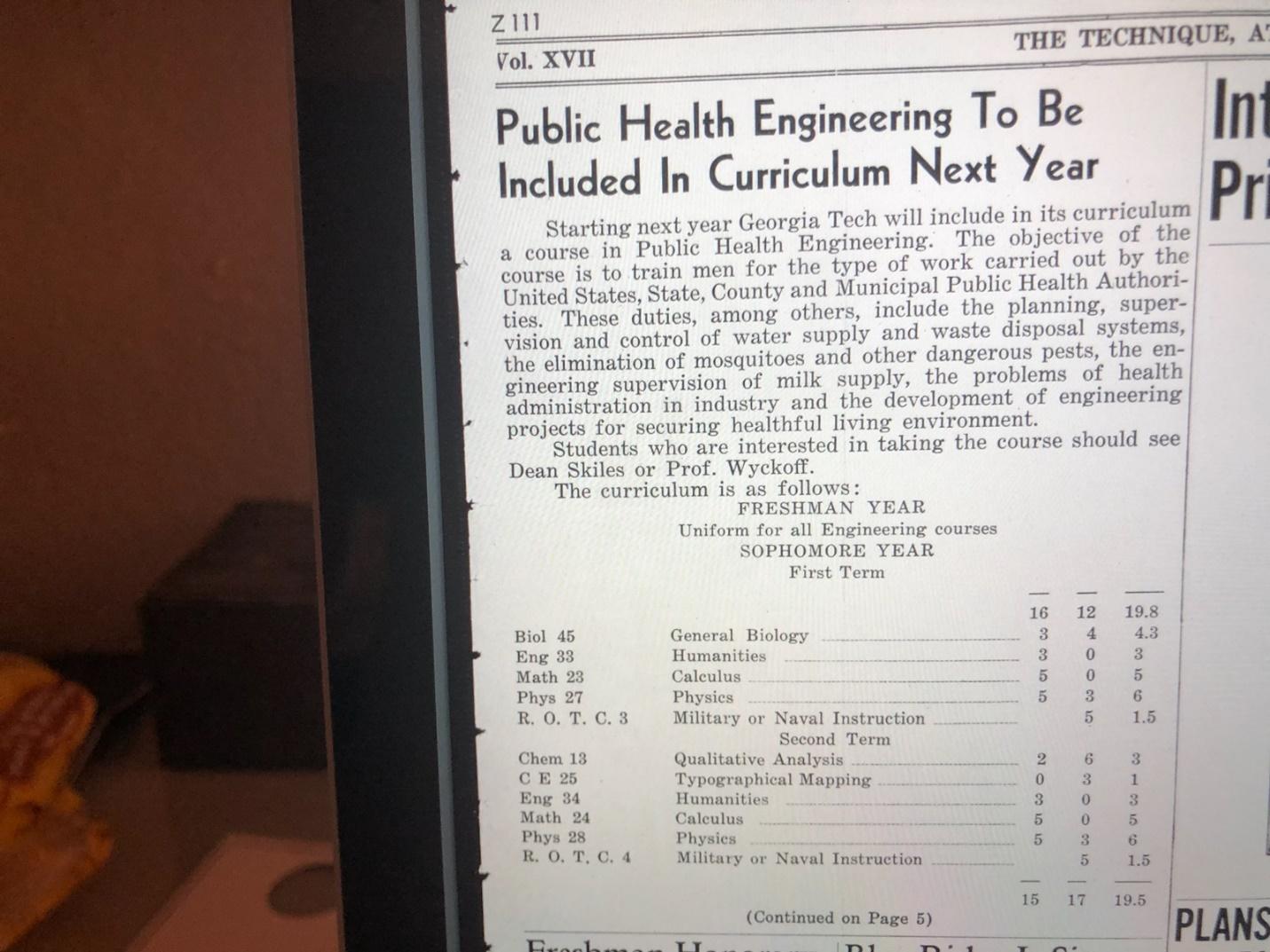
How has public health been engineered to make modern cities more livable, and why is sanitary engineering no longer something one majors in? Infrastructure such as sewer systems, water filtration, waste removal, and pest control remain under-appreciated bulwarks of health today, but how we train experts in them has changed. Drawing from the Georgia Tech archives, among others, this talk will explore how public health departments, college departments, professional societies, and city planning initiatives all had a part in engineering American public health.

https://www.asme.org/getmedia/d3ca54d6-e410-402e-85be-1e422fcc3de9/022222_public-health-is-a-job-for-engineers_03_after.jpg?width=319&height=250&ext=.jpg
Image credit: Getty

Jennifer Rogers is the Most Recent President of the Southern Association for the History of Medicine and Science (SAHMS). She is a historian of medicine, technology, and science. Her degrees are a BS in the History, Technology, and Society and an MS in the History and Sociology of Technology and Science from the Georgia Institute of Technology. A lifelong educator, researcher, and public historian, Rogers joined the board of SAHMS in 2014, serving as webmaster, registration coordinator, vice president, and two terms as president.

The lecture recording can be found here. The C.F. Reynolds Medical History Society thanks its dues-paying members and the University of Pittsburgh Center for Bioethics and Health Law for its support of the continuing relevance of medical history in our world.

C:\Users\Dell\Downloads\IMG_6745.jpg
Image credit: Jennifer Rogers, Georgia Tech Archives

Monday, October 7, 2024

Commemorating the 100th Anniversary of the 1st Exchange Transfusion for Icterus Gravis Neonatorum

The C.F. Reynolds Medical History Society has invited Dr. Jon F. Watchko, MD, Professor Emeritus in the Division of Newborn Medicine in the Department of Pediatrics at the University of Pittsburgh School of Medicine to present a lecture commemorating the 100th anniversary of the first exchange transfusion for severe neonatal jaundice. He will cover the groundbreaking work of Alfred P. Hart and L. Bruce Robertson at The Hospital for Sick Children in Toronto.

Mark your calendars for Tuesday, November 19, 2024, from 7-8pm, via Zoom. Zoom link:  https://ccac.zoom.us/j/95357525424?pwd=cI726bvrv5QgdxSisD9Yfsho9vl9pf.1

Exchange transfusion (ET) is a procedure that couples alternating blood removal (exsanguination) with blood infusion (transfusion) to accomplish its beneficial effect. ET has been a mainstay of treating hazardous neonatal hyperbilirubinemia (severe jaundice) for a 100 years dating back to Alfred P. Hart’s seminal use of the procedure in a newborn with familial icterus gravis neonatorum at the Hospital for Sick Children Toronto in 1924. Its novel application by Hart at that time and at the Hospital for Sick Children was no accident. The history of the development of ET as a viable treatment intervention and its original application to neonatal hyperbilirubinemia by Hart in 1924 is commemorated in this C.F. Reynolds Medical History Society presentation.

Dr. Watchko has a keen interest in the pathobiology of bilirubin-induced brain injury and clinical strategies to prevent kernicterus. His early work focused on unconjugated bilirubin brain uptake and clearance, determination of in vivo neurotoxic central nervous system bilirubin thresholds in the Gunn rat model of acute bilirubin encephalopathy (ABE) and in human neonates with kernicterus, pharmacologic neuroprotection against ABE, and bilirubin-induced cerebellar hypoplasia. More recently he has conducted clinical studies on improving the identification of infants at risk for significant hyperbilirubinemia and bilirubin neurotoxicity. Dr. Watchko is recognized as a world authority on neonatal jaundice, authored more than 200 academic papers, chapters and reviews, and co-edited two books, Neonatal Jaundice (2000) and Care of the Jaundiced Neonate (2012). He serves on the American Academy of Pediatrics National Hyperbilirubinemia Clinical Practice Subcommittee and is a member of the Society for Pediatric Research, the American Pediatric Society, and the Perinatal Research Society.

Image credit: Exchange Transfusion ~ early 1950s. Peter Dunn. Arch Dis Child 1993;69:95-96.

The C.F. Reynolds Medical History Society thanks its dues-paying members and the University of Pittsburgh Center for Bioethics and Health Law for its support of the continuing relevance of medical history in our world.

Tuesday, October 1, 2024

Donora: A Look Back at the Worst Air Pollution Disaster in US History

Tuesday, November 12, 2024, 6-7:15pm (Eastern)
~ Sylvan Stool Lecture ~
Andy McPhee, RN (Independent Scholar)


Mortician Rudolph Schwerha had already picked up two bodies in the dense fog. When he finally returned to the funeral home he found his wife, Helen, waiting at the door. “Before she spoke,” recalled Schwerha, “I knew what she would say. I thought, Oh, my God—another! I knew it by her face. And after that came another. Then another. There seemed to be no end. By ten o’clock in the morning, I had nine bodies waiting here.”

What was happening? “We didn’t know. I thought probably the fog was the reason; it had the smell of poison. But we didn’t know.”

Schwerha’s gut sense proved sadly accurate. A heavy fog had descended over Donora, a small steel and zinc mill town along the Monongahela River about 30 miles south of Pittsburgh. It was Halloween weekend in 1948, and before the weekend had ended 21 people would perish from the toxins concentrated in the fog, toxins that came mostly from the zinc mill at the north end of town. It was the worst air pollution disaster in US history, and it would prompt the legislation we know today as the Clean Air Act.

Join author Andy McPhee for a presentation about the town, its mills, and the smog that literally changed the quality of our air. Andy McPhee is a retired registered nurse and educational healthcare publisher, as well as the author of six books, most recently Donora Death Fog: Clean Air and the Tragedy of a Pennsylvania Mill Town, published by the University of Pittsburgh Press in 2023. The book provides the most complete and comprehensive accounting of the smog ever written. He is working on a book tentatively titled Bloodletting, Body Snatching, and the Doctors' Riot of 1788. McPhee lives in Saint Petersburg, Florida, with his wife and two dogs.


The C.F. Reynolds Medical History Society thanks its dues-paying members and the University of Pittsburgh Center for Bioethics and Health Law for its support of the continuing relevance of medical history in our world.

Sunday, September 1, 2024

Medicine’s Culture Brokers: The History of Miami and the Challenge of Diversity in Health Care

Tuesday, September 24, 2024, 6-7:15pm (Eastern)
~ Milton Meyer Michaels Lecture & Hispanic Heritage Month ~
Catherine Mas, PhD (Assistant Professor of History, Florida International University)


After the 1959 Cuban Revolution, hundreds of thousands of Cuban refugees came to Miami. With this influx, the city's health care system was overwhelmed not just by the number of patients but also by the differences in culture. Mainstream medicine was often inaccessible or inadequate to Miami's growing community of Latin American and Caribbean immigrants. Instead, many sought care from alternative, often unlicensed health practitioners. This talk discusses the history of how an exceptionally diverse medical scene would catch the attention of medical social scientists who made Miami's multiethnic population into a laboratory for cross-cultural care and "global health."

Catherine Mas is a historian of science, medicine, and society, whose research and teaching focus on modern American history in transnational context. Her recent book, Culture in the Clinic: Miami and the Making of Modern Medicine, examines the history of health and healing in Miami alongside the rise of medical anthropology. Delving into a period of rapid social and demographic change, she shows how Latinx immigrants transformed American healthcare, as the healthcare system learned to manage a racially and ethnically diverse population.

This lecture will be online only. Attendance is FREE. Zoom link: https://ccac.zoom.us/j/91318349535?pwd=zx3PJ8go1ukPKwyG3bifa65vdYPqpX.1

The C.F. Reynolds Medical History Society thanks its dues-paying members and the University of Pittsburgh Center for Bioethics and Health Law for its support of the continuing relevance of medical history in our world.

Wednesday, May 1, 2024

Announcing the 41st Lecture Series

The C.F. Reynolds Medical History Society announces its 41st lecture season for the academic year 2024-2025. All lectures are free and open to the public via Zoom. They take place on Tuesday evenings from 6-7:15pm Eastern. Watch this space for the links, or join our email list.

September 24 ~ “Medicine’s Culture Brokers: The History of Miami and the Challenge of Diversity in Health Care” ~ Catherine Mas ~ Milton Meyer Michaels Lecture & Hispanic Heritage Month

A life-long Pittsburgher, Dr. Michaels (1927-2022) practiced Hematology and Internal Medicine and served as President of the Society.

November 12 ~ “Donora: A Look Back at the Worst Air Pollution Disaster in US History" ~ Andy McPhee ~ Sylvan Stool Lecture
Dr. Stool (1925-2004) was a beloved pediatric otolaryngologist at the University of Pittsburgh and Children’s Hospital of Pittsburgh.

January 21~ University of Pittsburgh School of Public Health Lecture ~ TBA

February 25 ~ "Race-Concordant Care: Historical Insights and Ethical Challenges" ~ Wangui Muigai ~ University of Pittsburgh Department of Medicine Lecture 

And in the evening: "Black Infant Mortality and the American Roots of a Health Inequality"

April 1 ~ “The Legacy of Infant Surgery without Anesthesia: Implications for Today” ~ Wendy Patrice Williams ~ Jonathon Erlen Lecture

Dr. Erlen (1946-2022) was the history of medicine librarian at the University of Pittsburgh for 35 years, until his retirement in 2019. He was a devoted teacher in the undergraduate, graduate, and health professions schools, winning the School of Medicine Curriculum Committee’s Excellence in Education Award in 2004 for his month-long elective in medical history. He was an active member of the American Association of the History of Medicine, the American Osler Society, and the Southern Association of the History of Medicine and Science (SAHMS). And for decades John was the linchpin of the Reynolds Society as its secretary, treasurer, and (pre-COVID) host extraordinaire. The fact that he is irreplaceable is evidenced by the fact that the two of us (Kristen and Adam) barely fill his shoes. In particular, we remember John as a mentor to students and to up-and-coming scholars such as ourselves, introducing us to the authors of our favorite books and reviewing our papers before we presented them. If you never received an email with a list of recent dissertations that he thought you would find interesting, then you missed out on a unique gesture of friendship. 

The C.F. Reynolds Medical History Society thanks its dues-paying members and the University of Pittsburgh Center for Bioethics and Health Law for its support of the continuing relevance of medical history in our world.

Monday, April 1, 2024

Virulent: The Vaccine War

Tuesday, April 9, 2024, from 7-9pm
Public Health Building, Room A115


Join us for our last event of the year AND our first in-person activity on campus since the pandemic: a viewing of Virulent: The Vaccine WarIt's the newest documentary from Laura Davis (Producer) & Tjardus Greidanus (Director/ Editor/ Cinematographer), the makers of Burden of Genius about organ transplant pioneer Dr. Thomas Starzl. The cost is free! The film is 1.5 hours long. If you can, stay afterwards for a Q&A session with the filmmakers and Peter Salk, son of Jonas Salk and himself an expert on vaccines.

Monday, March 4, 2024

Inaugural Michaels Lecture: Gender, Race, and Science in Med School Design

 “Forming the Modern Physician: Gender, Race, and Science
in Early Twentieth-Century Medical School Design”
April 2, 2024 ~ Inaugural Michaels Lecture ~
Katherine L. Carroll, PhD (Independent Scholar)

Architectural historian Dr. Carroll has presented widely on medical school design and the intertwined ways in which the built environment influences scientific culture, as well as the ways in which cultural and social priorities affect building choices. As the University of Pittsburgh School of Medicine celebrates the one-year anniversary of the opening of the new West Wing of Scaife Hall, and Duquesne University renovates its campus to welcome a brand-new DO medical school, this was thoughtful commentary about how past schools have made other choices. Click here for the recording (starts at 4:40).

This was the first annual Milton Meyer Michaels lecture. A life-long Pittsburgher, Dr. Michaels (1927-2022) practiced Hematology and Internal Medicine for over five decades. He supported the C.F. Reynolds Medical History Society for many years, having also served as its President. We thank the generosity of his wife, Lois Glazer Michaels, and their children, Eric, Marian, and Jacob, for endowing this speakership.


The C.F. Reynolds Medical History Society thanks the University of Pittsburgh Center for Bioethics and Health Law for its support of the continuing relevance of medical history in our world.


Image: University of Pittsburgh School of Dentistry shortly after construction (1912). University of Pittsburgh Archives photograph collection, 1971-2006, item 31735070042936.

Image description: A sepia-toned photograph depicts a long, rectangular building with two stories of tall plain windows and one story of short windows. There is decorative stone work around the entrance portal and a small facade on the roof.

Thursday, February 1, 2024

“Accompanying History: The Journey to Undocumented Physicians”

February 20, 2024, 6-7:15pm Eastern Time
~ Inaugural John Erlen Lecture ~
Mark G. Kuczewski, PhD, HEC-C
(Loyola University Chicago)

Medical history and bioethics are siblings under the rubric of “health humanities.” For this lecture, Dr. Kuczewski will explore the history of undocumented healers in the United States. He has been engaged in bedside clinical ethics issues for more than 25 years. For the last decade, he has also been an articulate spokesperson for the just and equitable treatment of immigrant patients, medical students, and clinicians.  At noon, Dr. Kuczewski will present a Grand Rounds entitled “Caring for Immigrant Patients: Clinical and Institutional Challenges” to the University of Pittsburgh Department of Medicine. 

All Reynolds Society lectures are free and open to the public. This is the link to watch the recording of the evening lecture. You can check back here to see if the Grand Rounds recording has been posted.

Image description: We see the back of a young woman with brown skin and a long dark brown braid pulled forward over her shoulder. Colorful flowers and the words "I am one of those people Mexico sent" in white are painted on her bright red graduation mortar board with tassel. Credit: Bonnie Arbittier / San Antonio Report (2017)

Thursday, November 30, 2023

"Could a situation be more ghastly?": Doctors, Disinfectants, and the Dead After the Johnstown Flood of 1889

Tuesday, January 23, 2024, 6-7:15pm Eastern
~ University of Pittsburgh School of Public Health Lecture ~
Vicki Daniel, PhD (Case Western)

On May 31, 1889, the South Fork Dam located in Western Pennsylvania’s Conemaugh Valley failed catastrophically, sending a torrent of water toward the city of Johnstown and killing approximately 2,200 people. In the wake of the flood, officials from the Pennsylvania Board of Health immediately labeled the decomposing human bodies scattered throughout the valley as a massive health threat and established new protocols for protecting the public’s health. At the same time, survivors grieved the dead as beloved friends and neighbors who deserved proper burial and commemoration. For this reason, the Johnstown Flood represents a moment of conflict between the social and medical conceptualizations of the dead in the era of emerging public health paradigms. In this talk, I will examine the roots of this conflict and analyze how local leaders and state health officials in Johnstown tried to balance between the biological and social imperatives of mass fatality events. I will show how officials deployed public health measures that reflected a compromise between viewing the dead as dangerous material and seeing them as human remains.


Click here to watch the recording of the lecture. A brief business meeting took place before the lecture with reports from the Secretary and Treasurer as well as an election; see the Contact Us page for the current officers.

Image: Anonymous depiction of the flood water surging over the stone railway bridge, which is in the center. Behind it is a pile of burning buildings and trees with orange-yellow flames and gray smoke. There are people rushing about and bodies in the water and on the ground.

Tuesday, November 14, 2023

Putting Science to Work: Women Healers and the Pursuit of Medical Knowledge in Early Pennsylvania

November 14, 2023, 6-7:15pm Eastern Time
~ Sylvan E. Stool Memorial Lecture ~
Susan H. Brandt, PhD (University of Colorado, Colorado Springs) 


The history of women physicians in the United States often begins with the 1850 founding of the Women’s Medical College in Philadelphia. However, mid-19th-century women physicians merely continued the legacies of other women healers from earlier centuries. In this talk based on her book, Women Healers: Gender, Authority, and Medicine in Early Philadelphia (2022), Susan Brandt argues that women not only were essential health care providers but also were on the frontlines of scientific knowledge production.

Dr. Sylvan Stool was a beloved pediatric ENT surgeon at the University of Pittsburgh. All Reynolds Society lectures are free and open to the public. You can find the recording of the lecture here.

Image description: The book cover of Women Healers: Gender, Authority, and Medicine in Early Philadelphia by Susan H. Brandt shows an artfully arranged collection of 18th-century medical artifacts, books, and plants.

Saturday, October 28, 2023

Donora: Clean air started here

When you drive across the Donora-Monessen Bridge, you're greeted by a sign that reads, "Next to yours, the best town in the USA." Although the area has suffered both during the 5 decades there was a U.S. Steel plant along the horseshoe bend in the Monongahela River, and in the 7 decades since then, Donorans are incredibly proud of their hometown, which birthed not only Stan "The Man" Musial but both Ken Griffey, Sr., and Jr. The C.F. Reynolds Medical History Society was there to mark the 75th anniversary of a freak weather event that smothered the valley with the smoke from domestic fires, motor vehicles, trains, as well as industrial toxins from the wire factory and especially the zinc smelter. It became a rallying cry for the environmental movement in the middle of the 20th century.

We were treated to a private lecture by the Donora Historical Society's historian, Brian Charlton, who can talk extensively and extemporaneously about the area.


Above left: "Donora smog" painted into Halloween decorations on an empty storefront window.
Above right: The high school teams are the Donora Dragons.
Below: "After many silent springs, a fatal fall--the Donora Smog" and its victims.


highly recommend this 4-minute video, "A Town Called Donora: A Digital Story." It includes a dramatic introduction as well as a reading of Guenter Kunert's poem "Song of a Small Town" ("Lied von einer kleinen Stadt (Fuer eine Orgel)") published in East Berlin in 1950 after reading this Life magazine article with several black and white photographs.


The green oxygen canister below was used to deliver oxygen to some of the hundreds of residents who sickened on the carbon monoxide, ozone, nitric oxide and nitrogen dioxide, particulate matter, sulfur dioxide and trioxide, volatile organic compounds, and the components of acid rain (nitric acid and sulfuric acid) over the 5 days.


If you would like to learn more about the smog event, you can purchase Andy McPhee's book, Donora Death Fog: Clean Air and the Tragedy of a Pennsylvania Mill Town (2022), the first book-length treatment of the event. McPhee is a nurse and an accomplished writer and will be speaking to the Society during the 2024-2025 lecture season.


We admired the many exhibits of the museum before enjoying lunch at a local diner. We hope you'll join us on our next day trip!